11 Nov 2023
What are the Types of Respiratory Protective Equipment?
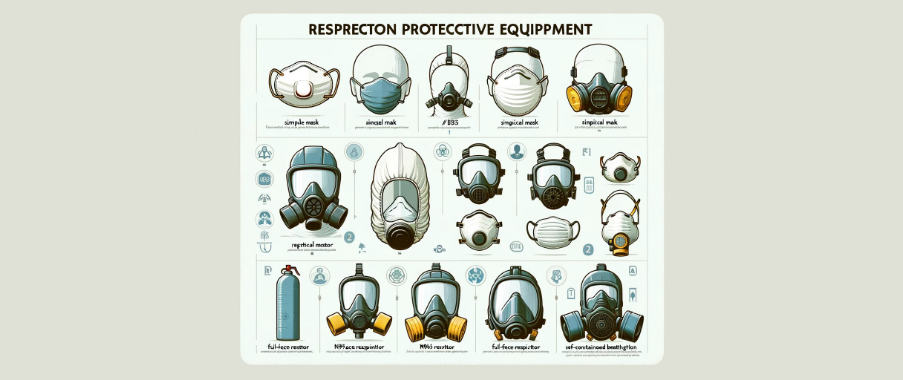
Respiratory Protective Equipment (RPE) is designed to protect individuals from inhaling hazardous substances in the workplace. There are several types of RPE, each suited for specific environments and hazards. The main types include:
-
Disposable Respirators: Often referred to as dust masks, these are lightweight masks designed for single use. They offer protection against low levels of dust and other particulates. Examples include FFP1, FFP2, and FFP3 masks, with varying levels of filtration efficiency.
-
Half-Mask Respirators: These cover the nose, mouth, and chin, and are usually made of rubber or silicone. They can be equipped with replaceable filters for protection against gases, vapors, and particulates. They are suitable for environments where eye protection is not a major concern.
-
Full-Face Respirators: Covering the entire face, these respirators provide protection against gases, vapors, and particulates, and also protect the eyes from irritants. They are necessary in environments where contaminants may harm the eyes or where higher levels of respiratory protection are required.
-
Powered Air-Purifying Respirators (PAPRs): These use a battery-powered blower to pass contaminated air through a filter, supplying the wearer with clean air. They are used in environments with hazardous particulates and can be equipped with half or full-face masks, or hoods.
-
Self-Contained Breathing Apparatus (SCBA): SCBAs supply the wearer with clean air from a compressed air cylinder, making them suitable for use in environments with oxygen-deficient atmospheres or high levels of toxic gases. They are commonly used in firefighting and chemical industry emergencies.
-
Escape Respirators: Designed for emergency use, these provide short-term protection during an escape from a contaminated area. They are typically half-masks or mouthpieces with a nose clip and are compact for quick access and use.
-
Supplied-Air Respirators (SARs): Also known as airline respirators, they supply the wearer with clean air through a hose from a source outside the contaminated area. They are used for long-duration work in environments with harmful substances.
Each type of RPE is designed to meet specific safety standards and requires proper fit testing and maintenance to ensure its effectiveness. It is crucial to select the appropriate RPE based on the specific hazards and conditions of the work environment.
Similar Content
-
 Gas Mask Selection Guide
 -
 How to Choose a Gas Mask Filter?
 -
 Why Does Your Mask Become Ineffective?
 -
 Invisible Danger: Why Do All Mask Standards Say "0.3 Micron"?
 -
 Mask Certifications Guide: Who Are You Entrusting Your Breath To?
 -
 Special Respiratory Masks for Chemical Environments
 -
 How Are Masks Cleaned and Maintained?
 -
 When Should the Filter Replacement Period Be for Masks?
 -
 In Which Sectors Are Respiratory Protective Equipment Used?
 -
 How Should Mask Usage Training Be Provided to New Employees?