07 Dec 2025
What Is a Gas Mask? How Is a Gas Mask Used?
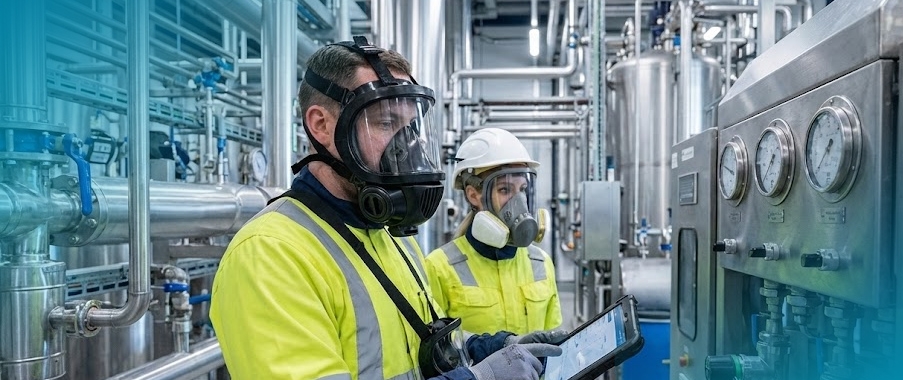
In industrial environments, emergency situations and hazardous work areas, gas masks are essential personal protective equipment used to prevent harmful gases, chemical vapors, smoke, particles and toxic substances from entering the body through respiration. Especially industrial plants, laboratory environments, fire departments and organizations where chemical processes are carried out consider the use of gas masks as part of their occupational safety standards.
How to Use a Gas Mask?
Correct and safe use of gas masks is critically important for the effectiveness of respiratory protection. Before use, the following checks must be carried out:
- Checking the integrity and expiration date of the filters
- Inspecting the physical condition of the mask body
- Cleaning of the goggles/viewing window
- Selecting the filter class appropriate for the area of use
- Performing a leakage (fit) test
- General hygiene and cleaning of face contact points
Gas Mask Usage Steps
After the necessary inspection and selection procedures are completed, the gas mask should be used with the following steps:
- Completion of inspection and maintenance procedures: The filter, mask body, straps and connection points must be checked.
- Positioning the mask correctly on the face: The mask is placed so that it fully fits the facial contours and the head straps are tightened with equal tension. The aim is to completely block air flow from the edges.
- Performing the leakage (fit) test: Using positive and/or negative pressure methods, the mask should close compatibly with the face.
- Attaching the filter: The filter cartridge is fixed by turning it clockwise. In case of chemical exposure, odor perception, or the end of the service life, the filter must be replaced.
- Removing the mask: The device should only be removed after moving to a safe area. If the filter becomes wet or damaged, it must be replaced immediately.
- Cleaning after use: The mask body should be cleaned with neutral soap and warm water and, after drying, stored properly.
How Does a Gas Mask Work?
The operating principle of gas masks is based on two main methods:
- Filtration Method
Filter components such as activated carbon, chemical binders and particle-trapping media (e.g. HEPA) retain harmful substances in the air and allow only clean air to be inhaled. - Supplied Air Method
In some professional systems, the mask can be connected to a clean air line or portable oxygen cylinders. In these systems, the air is not filtered; it is delivered directly from a reliable source to the user. This method is often preferred in environments with high levels of hazardous chemicals.
In Which Situations Are Gas Masks Used?
Chemical gas masks are used in many sectors to provide protection against different hazard classes. General areas of use include:
- Industrial plants involving chemical risks
- Environments with fire and dense smoke
- Military applications and defense equipment
- Laboratories, R&D and test centers
- Construction sites and areas with high dust concentration
- Natural disaster and emergency areas
- Agriculture and pesticide spraying activities
- Sewer and confined space works
Gas Filter Features
Gas mask filters are classified according to gas types in compliance with international standards:
- A: Organic gases and vapors
- B: Inorganic gases
- E: Acid gases / sulfur-containing compounds
- K: Ammonia and its derivatives
- ABEK: Combined protection filters
- P1–P3: Particle and dust filtration classes
When selecting a filter, the type and concentration of the hazard in the environment, duration of work and relevant EN standards (EN 136, EN 143, EN 14387, etc.) must be taken into consideration.
About Gas Mask and Filter Selection
The selection of a suitable gas mask is based on environmental analysis and risk classification. Since using the wrong filter can render respiratory protection completely ineffective, technical documentation should be reviewed during product selection and products compliant with official standards should be preferred.
Product Information and Technical Support
Our company offers chemical gas masks and filter systems that comply with industrial safety standards. The products undergo international certification processes and have a wide filter portfolio for different risk classes.
You can contact us for detailed technical information and product consultancy.
Similar Content
-
 Gas Mask Selection Guide
 -
 How to Choose a Gas Mask Filter?
 -
 Why Does Your Mask Become Ineffective?
 -
 Invisible Danger: Why Do All Mask Standards Say "0.3 Micron"?
 -
 Mask Certifications Guide: Who Are You Entrusting Your Breath To?
 -
 Special Respiratory Masks for Chemical Environments
 -
 How Are Masks Cleaned and Maintained?
 -
 When Should the Filter Replacement Period Be for Masks?
 -
 In Which Sectors Are Respiratory Protective Equipment Used?
 -
 How Should Mask Usage Training Be Provided to New Employees?